
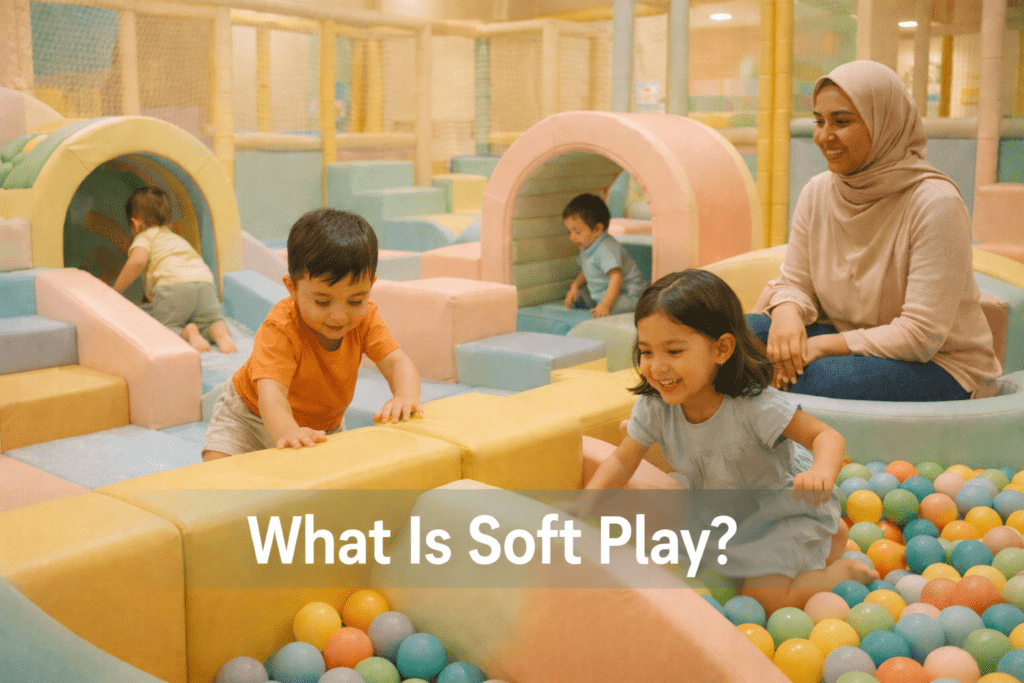
If you’re a parent of young children, you’ve probably heard the term soft play many times. You might have seen photos of padded play areas filled with slides, tunnels, and colorful shapes, or noticed soft play zones inside malls and family cafés. But what exactly is soft play, and why do so many parents choose it for their children?
Soft play isn’t just about entertainment. It’s a carefully designed form of indoor play that supports early development while keeping children safe and comfortable, especially in places like Saudi Arabia where outdoor play isn’t always practical.
What Is Soft Play?
Soft play refers to indoor play environments made entirely from soft, cushioned materials. These areas are designed for children to move, climb, crawl, slide, and explore without the risk of hard falls or sharp edges.
A typical soft play area includes padded flooring, foam climbing blocks, tunnels, slides, ball pits, and age-zoned play structures. Everything is built to absorb impact and reduce injury, making it ideal for babies, toddlers, and young children.
Soft play focuses on safe movement, exploration, and confidence-building, rather than speed or competition.
What Can Kids Do in a Soft Play Area?
Soft play areas allow children to move naturally and freely. Activities often include:
- Crawling through tunnels
- Climbing soft foam steps
- Sliding down low-height slides
- Exploring ball pits
- Balancing on padded platforms
- Engaging in sensory play with textures and colors
There are no rules about winning or losing. Children play at their own pace, which is especially important for toddlers and preschoolers.
Why Soft Play Is Popular with Parents
Parents choose soft play for several reasons, especially families living in hot or dusty climates like the Eastern Province.
Safety Comes First
Soft play areas use padded surfaces, rounded edges, and enclosed zones to protect children from falls and bumps. This makes them suitable even for early walkers who are still developing balance.
Age-Appropriate Play
Most soft play centers separate areas by age, offering dedicated toddler zones for younger children and slightly more challenging structures for older kids.
Easy Supervision
Parents can usually sit close by with a clear view of the play area, making it easier to supervise while still relaxing.
Indoor Comfort
Soft play venues are air-conditioned, clean, and weather-proof, making them reliable year-round options in Saudi Arabia.
How Soft Play Supports Child Development
Soft play plays an important role in early childhood development. While children are having fun, they are also building essential skills.
Physical Development
Climbing, crawling, and sliding help develop strength, balance, and coordination.
Motor Skills
Handling soft objects, navigating tunnels, and moving through obstacle-style structures support both fine and gross motor skills.
Social Skills
Soft play encourages children to interact with others, take turns, and play side by side in a relaxed environment.
Confidence and Independence
Because the environment feels safe, children are more willing to try new movements and explore independently.
Child development experts often emphasize the importance of active play in safe environments during early childhood, and soft play supports this perfectly.
What Ages Is Soft Play Best For?
Soft play is most suitable for:
- Babies who are crawling or learning to stand
- Toddlers aged 1–3
- Preschoolers aged 4–5
Some soft play areas also include sections for slightly older children, but soft play is especially valuable during the early years when children need gentle, low-impact movement.
Soft Play vs Outdoor Play
Outdoor play is important, but it isn’t always practical in Saudi Arabia due to heat, humidity, and dust. Soft play provides a safe alternative when outdoor parks aren’t comfortable.
Soft play offers:
- Consistent temperature control
- Cleaner environments
- Safer surfaces for younger children
- Reliable playtime regardless of weather
Many parents use soft play as a complement to outdoor play, not a replacement.
Soft Play vs High-Impact Activities
Unlike trampoline parks or fast-paced activity centers, soft play is low-impact and developmentally appropriate for younger children.
Soft play focuses on:
- Controlled movement
- Injury prevention
- Gradual physical development
This makes it a better option for toddlers whose joints and coordination are still developing.
What to Look for in a Good Soft Play Area
When choosing a soft play venue, parents should look for:
- Clean, padded flooring
- Clearly separated toddler zones
- Age-appropriate equipment
- Good visibility for supervision
- Regular cleaning routines
- Friendly, attentive staff
These details ensure a safe and enjoyable experience for both children and parents.
Why Soft Play Works So Well in Saudi Arabia
Soft play has become especially popular across Saudi Arabia because it fits naturally into family life here. With long summers and busy schedules, parents appreciate having safe indoor options where children can stay active.
In cities like Dhahran and Khobar, soft play centers are often part of family cafés or indoor entertainment spaces, making them convenient for weekend outings, playdates, and even birthday celebrations.
A Familiar Choice for Families in Dhahran
Many families in Dhahran choose soft play venues like Twinkle Fun & Yum because they offer a calm, welcoming environment designed for young children. The combination of padded play zones and comfortable seating allows parents to relax while kids play safely.
Soft play spaces like this often become part of a family’s regular routine, especially for toddlers and preschoolers.
Final Thoughts
Soft play is more than just a fun activity. It’s a safe, supportive way for young children to explore movement, build confidence, and develop essential skills in a comfortable indoor setting.
For parents in Saudi Arabia looking for reliable, child-friendly activities, soft play remains one of the best choices for early childhood play.