
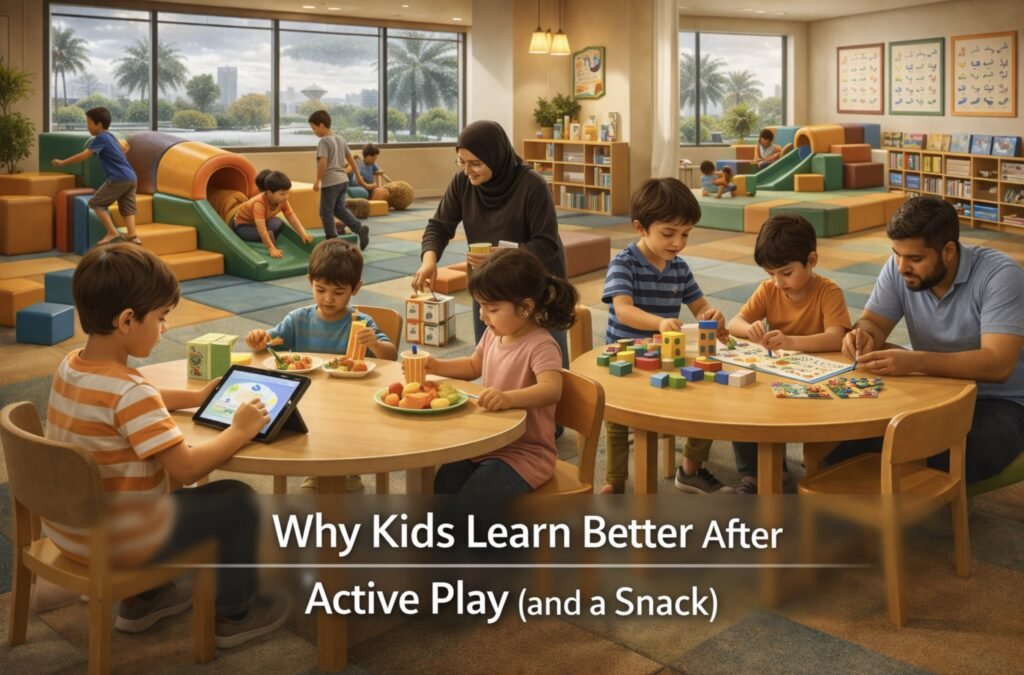
If you’ve ever noticed your child suddenly focusing better after running around or becoming calmer once they’ve had a snack, you’re not imagining it. There’s a very real connection between movement, nutrition, and learning, especially for young children.
Parents often try to sit kids down to learn first, assuming focus comes before play. In reality, it’s usually the other way around. For most children, active play followed by a small snack creates the ideal state for learning.
Let’s break down why this works so well, and how parents can use it in everyday life.
Movement Prepares the Brain to Learn
Children aren’t designed to sit still for long periods, especially toddlers and preschoolers. Their bodies and brains develop through movement.
When kids engage in active play, several important things happen:
- Blood flow to the brain increases
- Oxygen levels rise
- Stress hormones decrease
- Attention systems become more regulated
After movement, the brain is more alert and ready to absorb information. This is why children often listen better, remember more, and stay calmer after they’ve had time to move.
Active Play Helps Release Built-Up Energy
Children store energy quickly. When that energy has nowhere to go, it often shows up as:
- Restlessness
- Fidgeting
- Short attention spans
- Frustration or meltdowns
Active play gives kids a healthy outlet. Running, climbing, crawling, or jumping helps release that energy so it doesn’t interfere with learning time later.
Instead of fighting a child’s need to move, active play works with it.
Play Builds the Skills That Learning Depends On
Active play doesn’t just burn energy. It strengthens the foundation for learning.
Through physical play, children develop:
- Balance and coordination
- Body awareness
- Focus and self-control
- Problem-solving skills
- Confidence
These skills directly support classroom learning, reading, listening, and following instructions.
Why a Snack Matters After Play
After active play, children’s bodies need fuel. Movement uses energy, and without refueling, kids may feel tired, irritable, or unfocused.
A small snack helps:
- Stabilize blood sugar
- Prevent sudden energy crashes
- Support brain function
- Improve mood and patience
This is why many children seem calmer and more receptive after eating something simple.
What Makes a Good Post-Play Snack
The best snacks don’t need to be complicated. Simple, balanced options work best.
Good examples include:
- Fruit with yogurt
- A sandwich half
- Cheese with crackers
- Banana and milk
- Dates with nuts (for older kids)
The goal is steady energy, not sugar highs.
The Play → Snack → Learn Sequence
This natural rhythm works well for most kids:
- Active play to release energy
- Snack to refuel
- Learning or quiet activity
When parents follow this order, learning feels easier for everyone involved.
Children are:
- More relaxed
- Better able to sit and listen
- Less resistant to tasks
- More confident and engaged
Why This Works Especially Well for Young Children
Toddlers and preschoolers learn through their bodies first, then their minds. Expecting them to focus without movement goes against how they’re wired.
Active play helps regulate emotions and attention, making it easier for them to:
- Follow instructions
- Try new activities
- Engage in conversation
- Practice early learning skills
This approach respects where children are developmentally.
How Parents Can Use This at Home
You don’t need structured lessons or strict schedules. Small adjustments make a big difference.
Try:
- Letting kids play before homework or reading
- Offering a snack before quiet time
- Encouraging movement breaks between activities
- Using play as a transition, not a reward
Learning becomes smoother when it follows the child’s natural rhythm.
Why Indoor Play Spaces Help Create This Balance
In places where outdoor play isn’t always practical, especially during hot or dusty days, indoor play spaces make active play easier to manage.
Soft play environments allow children to move safely, then transition naturally into calmer activities afterward. For many families in Dhahran, places like Twinkle Fun & Yum offer this balance, active play for kids followed by a relaxed café setting where children can rest, snack, and reset.
This flow supports both learning and family routines.
What This Looks Like in Real Life
A realistic example might be:
- Morning: soft play or active movement
- Snack break
- Reading, drawing, or simple learning activity
Or after school:
- Physical play
- Snack
- Homework or quiet time
No pressure, no perfection, just a rhythm that works with children instead of against them.
Final Thoughts
Children don’t learn best when they’re tired, hungry, or restless. They learn best when their bodies are regulated, their energy is balanced, and they feel calm and supported.
Active play followed by a simple snack creates that ideal state naturally. When parents embrace this sequence, learning feels less like a struggle and more like a natural part of the day.
Sometimes, the smartest thing we can do for learning is simply letting kids move first.