
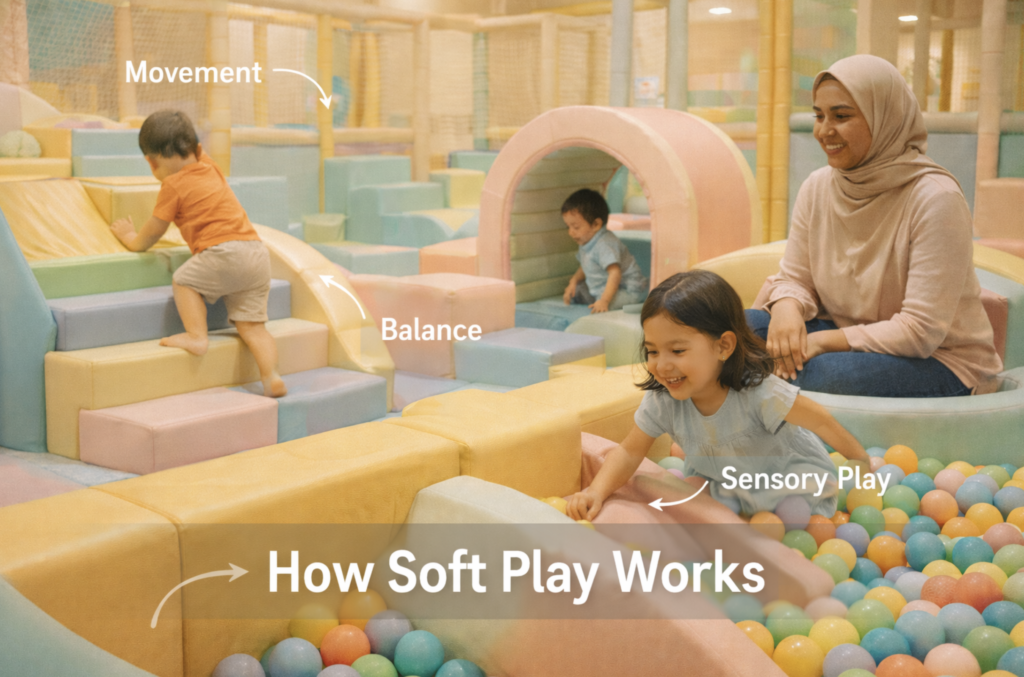
If you’ve ever watched your toddler climb a soft foam step, crawl through a tunnel, or tumble into a ball pit with a big smile, you’ve already seen soft play in action. But many parents still ask an important question: how does soft play actually work, and why is it so effective for young children?
Soft play isn’t random or unstructured. It’s thoughtfully designed to support children’s physical development, confidence, and curiosity while keeping safety front and center. Understanding how soft play works can help parents choose the right environments for their children and feel more confident about letting them explore.
The Basic Idea Behind Soft Play
Soft play works by allowing children to move freely in a safe, padded environment where falls, bumps, and trial-and-error learning are part of the experience, not a risk.
Instead of hard surfaces or fixed playground equipment, soft play uses foam-based structures, cushioned flooring, and rounded edges. This design removes fear from movement, encouraging children to try climbing, balancing, crawling, and sliding without hesitation.
For babies and toddlers especially, this freedom is essential for healthy development.
How Soft Play Encourages Movement
Children naturally want to move. Soft play channels that energy into age-appropriate activities.
Climbing and Crawling
Soft foam steps, ramps, and climbing blocks encourage children to:
- Strengthen muscles
- Improve coordination
- Practice balance
- Develop spatial awareness
Because everything is padded, children feel safe attempting movements they might avoid on harder playgrounds.
Sliding and Rolling
Low-height slides and gentle slopes allow kids to experience motion safely. These movements support body control and help children understand how their bodies move through space.
Free Exploration
Soft play areas are typically open-ended. Children choose what to do next, building independence and confidence at their own pace.
How Soft Play Supports Brain Development
Movement and learning are closely connected in early childhood. Soft play environments stimulate the brain through:
- Sensory textures and colors
- Problem-solving during climbing or navigating obstacles
- Cause-and-effect learning
- Social interaction with other children
When a child figures out how to climb over a block or crawl through a tunnel, they’re not just playing, they’re building cognitive skills.
The Role of Sensory Play
Sensory play is a key part of how soft play works. Children interact with:
- Soft and firm textures
- Bright but calming colors
- Shapes and spatial layouts
These sensory experiences help children process information, regulate emotions, and develop focus. This is especially helpful for toddlers who are still learning how to interpret the world around them.
Why Soft Play Is Structured but Not Restrictive
One reason parents love soft play is that it offers gentle structure without strict rules.
There are usually:
- Clearly defined play zones
- Age-appropriate sections
- Open pathways for movement
But children aren’t told exactly how to play. This allows creativity and imagination to grow naturally.
How Safety Is Built Into Soft Play
Safety is not an afterthought in soft play. It’s built into every element.
Padded Flooring
Floors absorb impact, reducing the risk of injury from falls.
Rounded Edges
No sharp corners or hard materials.
Age-Zoned Areas
Baby and toddler zones are separated from older children’s play areas.
Clear Visibility
Parents can easily supervise from nearby seating.
These features allow children to explore while parents feel reassured.
How Soft Play Works for Different Ages
Babies (Crawling Stage)
Soft play provides:
- Safe tummy time
- Crawling practice
- Gentle sensory exploration
Toddlers (1–3 years)
This is where soft play truly shines. Toddlers develop:
- Balance
- Coordination
- Confidence
- Early social skills
Preschoolers (4–5 years)
Slightly more complex structures challenge older kids without overwhelming them.
Soft Play vs Traditional Playgrounds
Outdoor playgrounds are great, but they’re not always suitable, especially in Saudi Arabia’s climate. Soft play offers:
- Climate-controlled comfort
- Clean, enclosed spaces
- Safer surfaces for young children
- Consistent access year-round
Many parents use soft play as a regular activity when outdoor play isn’t practical.
How Soft Play Helps Social Skills
Soft play encourages children to interact naturally. There are no teams or competition. Kids learn to:
- Take turns
- Share space
- Observe others
- Play side by side
These early interactions build emotional intelligence in a relaxed setting.
Why Parents Feel Comfortable With Soft Play
Parents appreciate soft play because it:
- Reduces worry about injuries
- Allows close supervision
- Fits easily into busy schedules
- Works for short or long visits
Soft play environments often become part of a family’s weekly routine, especially for toddlers.
Soft Play in the Context of Family Life in Saudi Arabia
In cities like Dhahran and Khobar, soft play has become an essential part of family entertainment. With long summers and limited outdoor windows, indoor play spaces allow children to stay active while parents stay comfortable.
Family-oriented soft play cafés, such as Twinkle Fun & Yum, combine safe play zones with seating and refreshments, making outings practical and enjoyable for everyone.
Final Thoughts
Soft play works because it aligns perfectly with how young children grow and learn. It gives them freedom to move, space to explore, and safety to try new things without fear.
For parents, it offers peace of mind and a reliable way to support healthy development in a fun, engaging way.
 English
  Arabic