
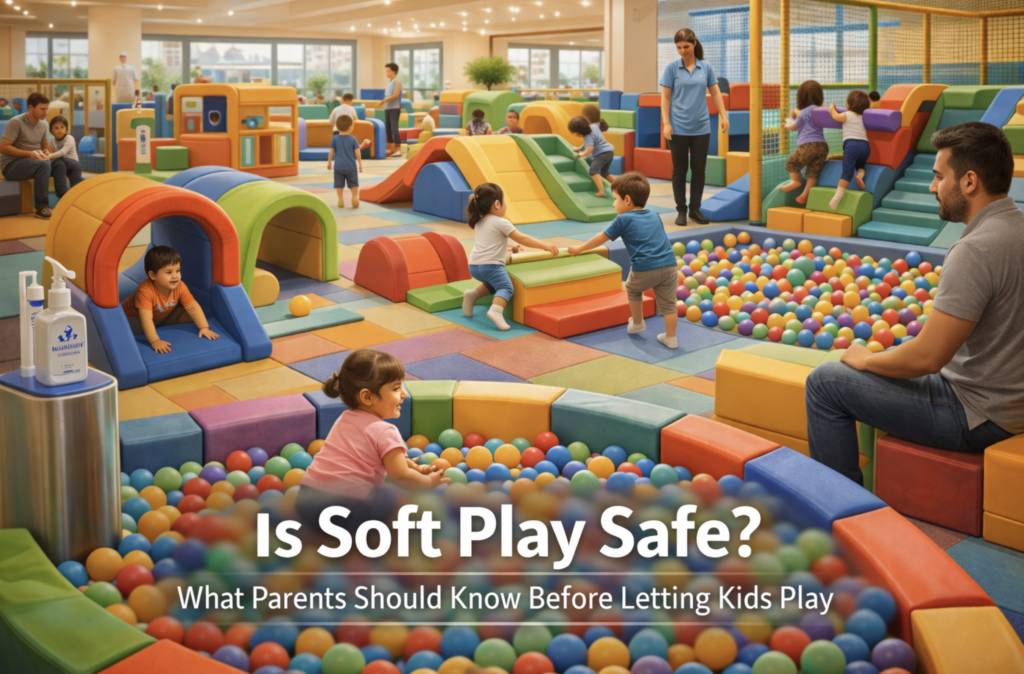
If you’re a parent of a baby, toddler, or preschooler, safety is always the first question that comes to mind when choosing an activity. Soft play areas look fun and inviting, but it’s completely natural to ask, is soft play actually safe for young children?
The short answer is yes, soft play is considered one of the safest indoor play options for babies and young children when it’s designed and maintained properly. The longer answer explains why it’s safe, what makes a good soft play environment, and what parents should look for before choosing a venue.
What Makes Soft Play Safer Than Many Other Play Options
Soft play environments are designed with safety as the foundation, not as an afterthought. Every element is intentionally built to reduce risk while still encouraging movement and exploration.
Soft, Impact-Absorbing Materials
Unlike traditional playgrounds or hard indoor play equipment, soft play uses foam-based structures and padded flooring. These materials absorb impact when children fall, which significantly reduces the chance of injury.
For toddlers who are still learning balance, falling is part of development. Soft play allows those falls to happen safely.
Rounded Edges and Low Heights
Soft play structures are designed with rounded edges and low climbing heights. Slides are short, steps are wide, and ramps are gentle. This keeps play challenging enough to support development but not risky.
Is Soft Play Safe for Babies and Toddlers?
Yes, when the area is age-appropriate.
Most quality soft play venues separate spaces by age, creating dedicated zones for babies and toddlers. These areas focus on crawling, gentle climbing, and sensory play rather than fast movement or height.
For babies and toddlers, soft play supports:
- Safe tummy time and crawling
- Early walking and balance practice
- Controlled exploration without sharp surfaces
Parents should always look for clearly marked baby or toddler zones to ensure younger children aren’t sharing space with older, more energetic kids.
How Supervision Plays a Role in Safety
Soft play is designed to be supervised play. One of the reasons parents feel comfortable with soft play is that they can stay close and maintain clear visibility at all times.
Good soft play venues provide:
- Open layouts
- Seating near play areas
- Clear sightlines without blind spots
This allows parents to intervene quickly if needed while still giving children independence.
Cleanliness and Hygiene in Soft Play Areas
Safety isn’t only about physical injury. Cleanliness is especially important for young children who often touch surfaces and put hands in their mouths.
Well-managed soft play venues follow strict hygiene routines, including:
- Regular cleaning of padded flooring
- Sanitizing foam equipment
- Cleaning ball pits frequently
- Daily surface disinfection
Parents can usually tell right away if a venue prioritizes cleanliness. A clean smell, tidy play zones, and visible staff maintenance are good signs.
How Soft Play Compares to Other Indoor Activities
Many parents compare soft play with other popular indoor options.
Soft Play vs Trampoline Parks
Trampoline parks involve high-impact movement and are better suited for older children. Soft play, on the other hand, is low-impact and designed specifically for younger bodies that are still developing.
Soft Play vs Outdoor Playgrounds
Outdoor playgrounds are great, but they often include hard surfaces, metal equipment, and higher structures. Soft play offers a safer alternative when children are very young or when weather makes outdoor play uncomfortable
What Safety Standards Should Soft Play Meet?
A safe soft play environment typically includes:
- Thick padded flooring
- Securely fixed equipment
- Age-appropriate design
- Clear rules for play
- Regular equipment inspections
Parents don’t need to inspect technical details, but they should feel confident that equipment looks well-maintained and stable.
Common Safety Concerns Parents Ask About
Can children bump into each other?
Minor bumps can happen in any play environment, but soft play’s padded surfaces reduce injury risk. Age zoning also helps prevent collisions between very different age groups.
Is soft play safe for shy or cautious children?
Yes. Soft play allows children to explore at their own pace. There’s no pressure to participate in fast or competitive activities.
What about overstimulation?
Good soft play environments use calm colors, controlled lighting, and thoughtful layouts to prevent sensory overload, especially for toddlers.
What Parents Can Do to Keep Soft Play Safe
Parents also play an important role in safety. Simple steps include:
- Choosing age-appropriate zones
- Staying nearby during play
- Encouraging gentle play
- Following venue rules
- Visiting at quieter times if your child prefers calm environments
Soft play works best as a shared experience between children and attentive caregivers.
Why Parents in Saudi Arabia Trust Soft Play
In cities like Dhahran and Khobar, soft play has become a trusted part of family life. The climate makes indoor play essential, and parents value environments that are safe, clean, and designed for young children.
Family-oriented soft play cafés such as Twinkle Fun & Yum offer padded play areas, clear supervision, and comfortable seating for parents. This combination makes soft play not only safe but also practical and relaxing for families.
When Soft Play Might Not Be the Right Choice
Soft play may not be ideal if:
- A child is significantly older and looking for high-energy challenges
- The venue does not separate age groups
- Equipment looks worn or poorly maintained
In these cases, parents may want to explore other age-appropriate activities.
Final Thoughts
So, is soft play safe?
When designed properly, supervised responsibly, and maintained well, soft play is one of the safest and most development-friendly indoor activities for babies, toddlers, and young children.
It allows kids to move, explore, and grow in confidence while giving parents peace of mind. That balance is why soft play remains a popular choice for families in Saudi Arabia and beyond.
 English
  Arabic