
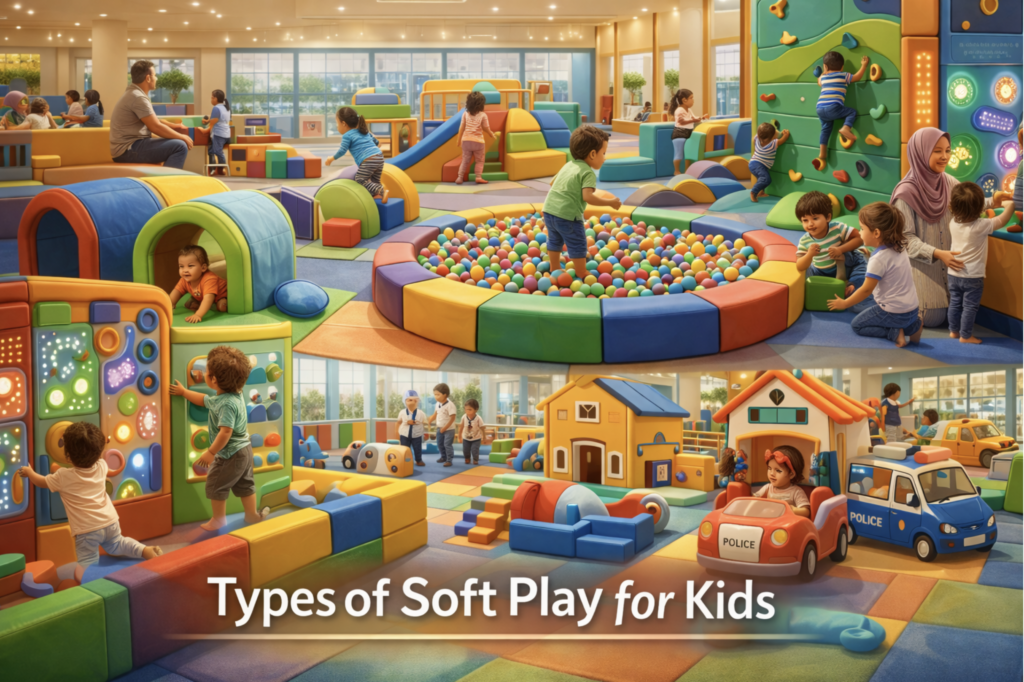
When parents hear the term soft play, many imagine one general type of indoor play area. In reality, soft play comes in several forms, each designed for different ages, abilities, and developmental needs. Understanding the different types of soft play can help parents choose the right environment for their child, whether they’re planning a weekend outing, a playdate, or a birthday celebration.
In Saudi Arabia, where indoor play is a big part of family life due to the climate, soft play has become a popular choice for babies, toddlers, and young children.
What Makes Soft Play Different from Other Play Areas
Soft play environments are built using padded materials, rounded edges, and cushioned flooring. The goal is to allow children to move freely without fear of injury. Unlike high-energy or competitive play spaces, soft play focuses on gentle exploration, safety, and age-appropriate movement.
Different soft play types cater to different developmental stages, which is why knowing the options matters.
1. Baby Soft Play (Crawling & Early Movement Zones)
Baby soft play areas are designed specifically for infants and early crawlers. These zones are usually separate from older children’s areas and focus on sensory exploration rather than physical challenges.
Key Features
- Soft mats and padded floors
- Low-height foam shapes
- Sensory toys and textures
- Tummy-time friendly spaces
Best For
- Babies from around 6 months to early walkers
Why Parents Love It
These spaces feel calm, safe, and supportive for first-time explorers. Parents can sit close and watch every movement.
2. Toddler Soft Play Zones
Toddler soft play is the most common type and the one parents often think of first. It’s designed for children aged 1 to 3 who are learning to walk, climb, and balance.
Key Features
- Foam climbing steps and ramps
- Low slides
- Crawl tunnels
- Small ball pits
- Bright but gentle colors
Best For
- Toddlers who are curious and active but still developing coordination
Why It Works
Toddlers need movement without risk. Soft play allows them to try, fall, and try again without fear.
3. Multi-Level Soft Play Structures
These are larger soft play setups often found in indoor play centers. They include multiple connected sections at different heights, designed for preschoolers and slightly older children.
Key Features
- Multi-level climbing areas
- Soft nets and ramps
- Slides connecting different levels
- Clear safety padding throughout
Best For
- Preschoolers aged 3–6
Parent Tip
Look for venues that clearly separate these structures from baby and toddler zones.
4. Sensory Soft Play Areas
Sensory soft play focuses on stimulating the senses rather than physical challenges. These spaces are especially helpful for children who benefit from calm, structured environments.
Key Features
- Textured mats
- Soft lighting
- Gentle sounds or visual elements
- Interactive sensory panels
Best For
- Toddlers and preschoolers
- Children who enjoy quieter play
- Kids who may feel overwhelmed in loud spaces
Why It Matters
Sensory play supports emotional regulation, focus, and early learning.
5. Soft Play with Role Play Elements
Some soft play spaces combine padded structures with imaginative role play. These areas allow children to pretend, create stories, and engage socially.
Key Features
- Soft houses or tunnels
- Pretend shops or themed corners
- Costume-friendly spaces
- Interactive play props
Best For
- Preschoolers who enjoy imaginative play
Developmental Benefit
Encourages communication, creativity, and social skills.
6. Soft Play Cafés
Soft play cafés have become increasingly popular in Saudi Arabia. These spaces combine a soft play area for children with seating and refreshments for parents.
Key Features
- Soft play zones visible from seating
- Comfortable parent areas
- Food and drink options
- Calm, family-friendly atmosphere
Best For
- Families with toddlers and young children
- Weekend outings
- Playdates
Soft play cafés like Twinkle Fun & Yum offer parents the chance to relax while kids play safely nearby.
7. Portable and Pop-Up Soft Play
Portable soft play setups are often used for events, birthday parties, or temporary installations.
Key Features
- Modular foam pieces
- Easy setup and removal
- Customizable layouts
Best For
- Birthday parties
- Community events
- Indoor gatherings
Parents should always check that pop-up setups meet safety and cleanliness standards.
8. Soft Play for Birthday Parties
Many soft play venues offer birthday-specific setups that combine play with celebration.
Key Features
- Reserved playtime
- Party seating areas
- Simple decorations
- Staff assistance
Soft play birthday parties are especially popular for toddlers because they keep children engaged without overwhelming them.
How to Choose the Right Type of Soft Play
When choosing a soft play area, consider:
- Your child’s age
- Energy level
- Sensory preferences
- Safety features
- Visibility for supervision
The right soft play type makes the experience enjoyable for both kids and parents.
Why Soft Play Is Ideal for Families in Saudi Arabia
Soft play fits naturally into family life in Saudi Arabia. With high temperatures for much of the year, indoor play options are essential. Soft play offers:
- Climate-controlled comfort
- Safe, padded environments
- Flexible visit times
- Reliable weekend entertainment
Families in cities like Dhahran and Khobar often make soft play part of their regular routine.
A Familiar Choice for Parents in Dhahran
Many families prefer soft play cafés like Twinkle Fun & Yum because they offer multiple types of soft play under one roof, from toddler zones to sensory areas, along with comfortable seating for parents.
These venues provide peace of mind and convenience for busy families.
Final Thoughts
Soft play isn’t one-size-fits-all. From baby zones and toddler play to sensory spaces and soft play cafés, each type serves a different purpose. Understanding the types of soft play helps parents choose experiences that truly match their child’s needs.
For young children, especially in indoor-focused environments like Saudi Arabia, soft play remains one of the safest and most beneficial ways to play, learn, and grow.
 English
  Arabic